
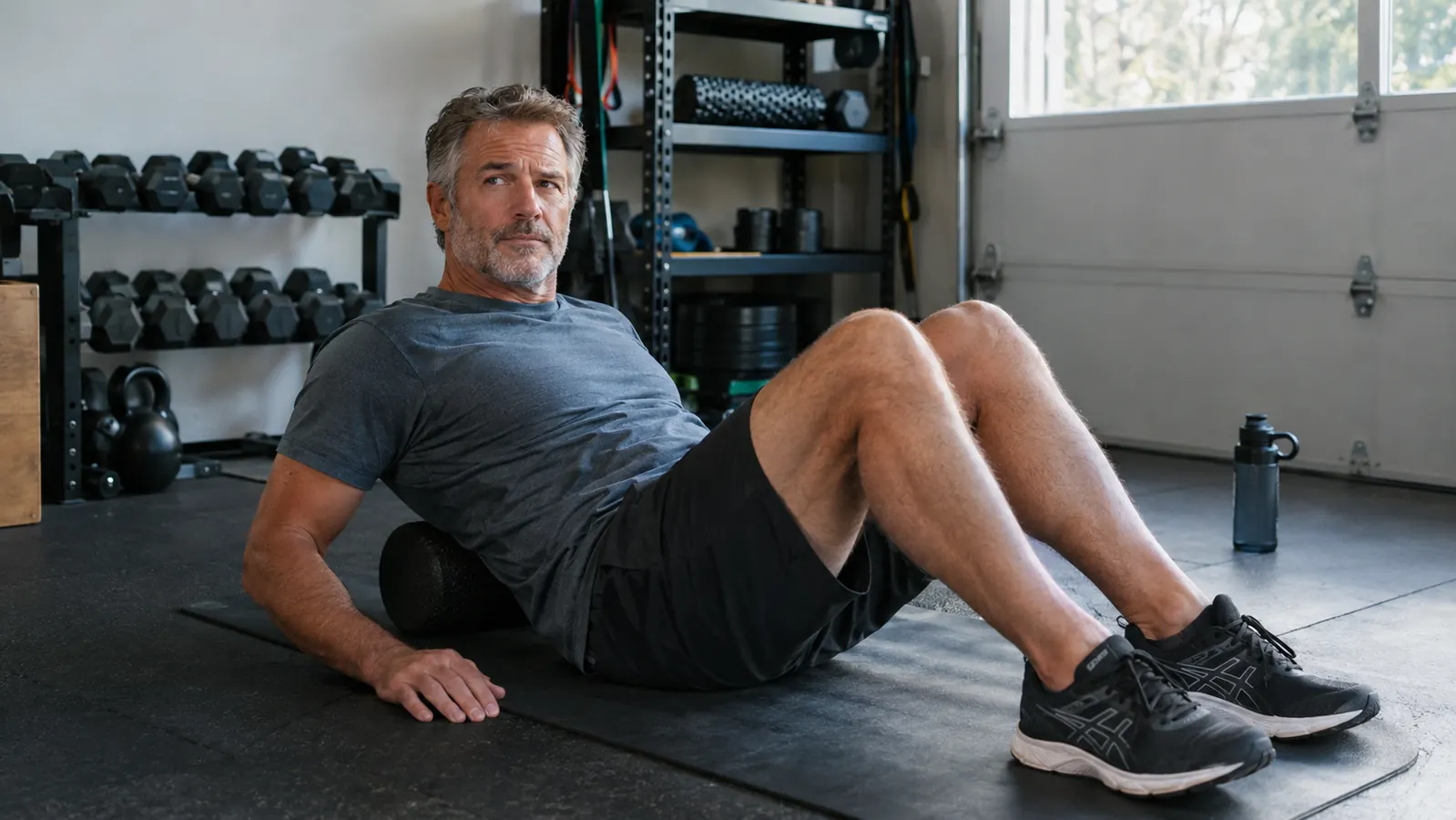
I'll be honest with you: I did not want to like the 321 STRONG Foam Roller. I have a garage shelf full of things that promised to sort out my lower back and ended up as expensive dust collectors. A massage gun that I used twice. A lumbar support that slid around the car seat. A stretching strap that Diane now uses to hang a blanket over the radiator. So when the 321 STRONG showed up, I gave it the same skeptical look I give every new gadget that claims to help a 56-year-old back that has been cranky for the better part of a decade.
Six weeks later, it is the one piece of gear I actually reach for most mornings. That surprised me. It also hurt more than I expected, in a good way, and there are a few things about it that I think you should know before you spend your money. This is the honest version, the stuff I wish someone had told me before I bought my first roller.
The Quick Verdict
A well-built, medium-density roller with three distinct surface zones that does exactly what it promises: it works out knots and loosens a stiff back. It is not a cure, it is not comfortable at first, and the textured zone will make you yelp. But for the price, it is the most useful back tool I own.
Amazon Check Today's Price →The roller I actually use at 6:30 in the morning
After six weeks of daily use, the 321 STRONG is the first thing I reach for when my back is stiff. It is firm enough to do real work, gentle enough that I do not dread it, and the three zones mean I can start easy and go deeper as I warm up.
Amazon Check Today's Price on Amazon →How I've Used It
I am not a physical therapist and I do not play one in this review. I am a retired letter carrier who walked the same route for 27 years, and my lower back has been stiff for the last ten. My physical therapist gave me a home program years ago, and foam rolling has been part of it on and off. The difference is that this time I actually stuck with it.
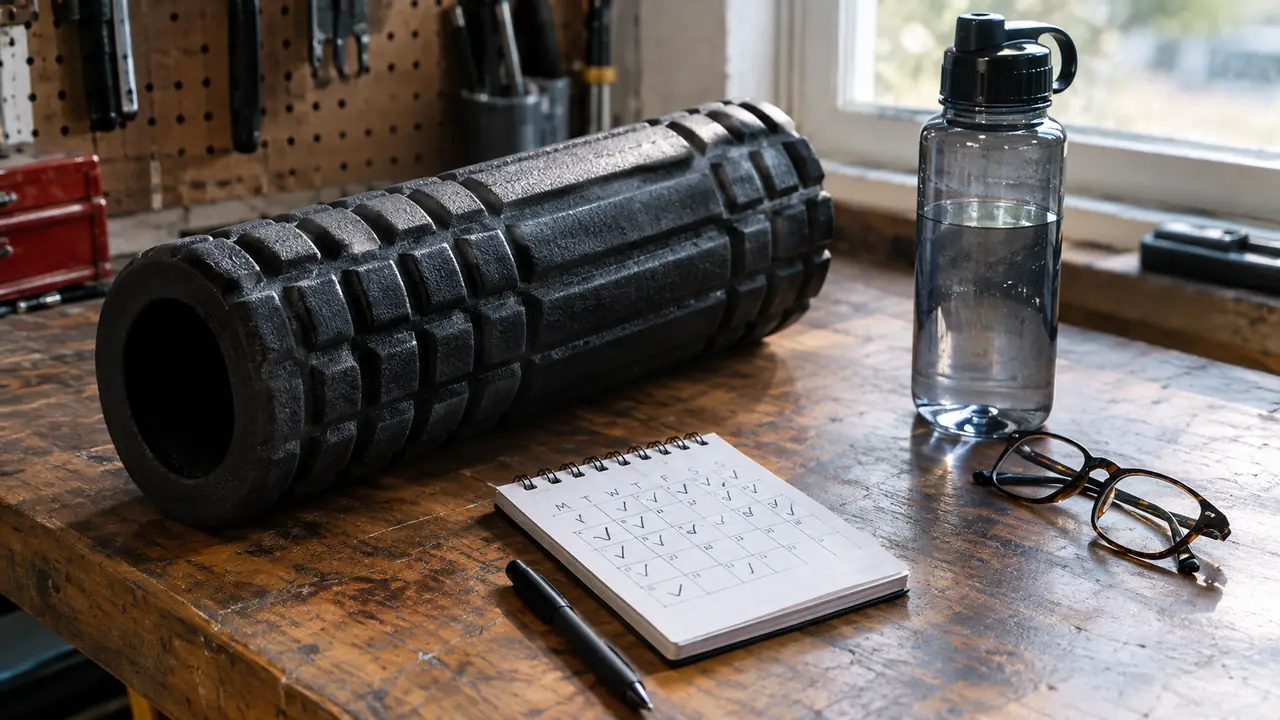
For six weeks, I used the 321 STRONG every morning before coffee. I rolled my calves, my hamstrings, my glutes and my lower back, roughly ten minutes total. I kept a little notebook on the garage workbench and put a check mark on the days I used it. I missed four days, all of them because life got in the way, not because I was avoiding it. That is a better record than I have with any other piece of recovery gear I own.
I also used it after yard work, which is my main trigger. A few hours of raking and hauling bags leaves my back tight for two days. Rolling afterward did not erase the soreness, but it took the edge off and made the next morning noticeably better. That is the honest ceiling: it eases and soothes, it does not cure anything.
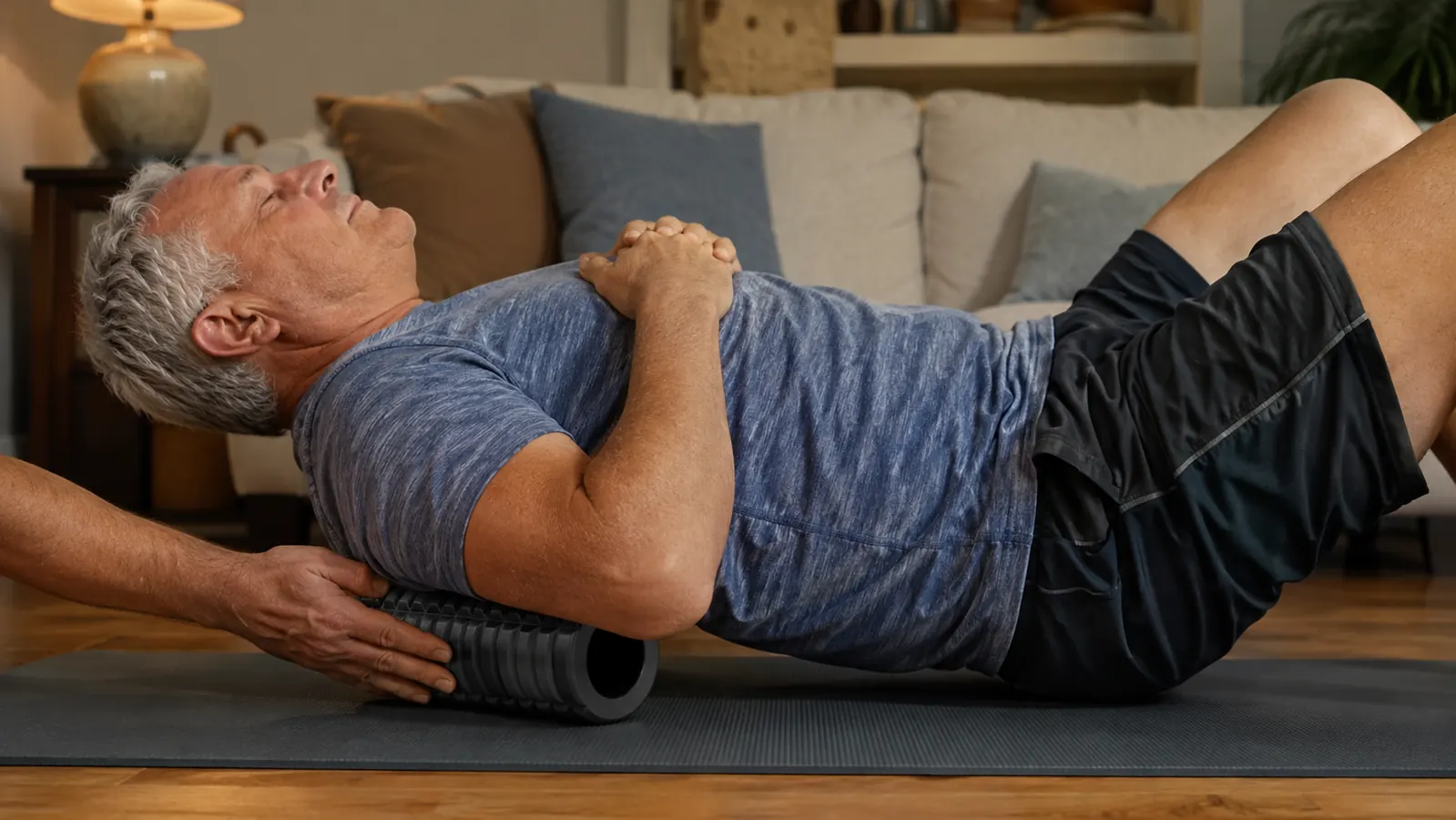
I want to be clear about how I use it, because how you use a roller matters as much as which one you buy. I roll my upper back, the outside and front of my thighs, and my calves. I do not roll my lower back directly, and I do not roll my neck. My physical therapist was firm about that years ago, and I have never seen a reason to argue. I keep sessions to about ten minutes, three or four mornings a week, on a mat in the garage with a chair nearby to help me get up.
What Nobody Tells You About the Three Zones
The 321 STRONG has three different surface zones on one roller, and the marketing makes it sound like a magic trick. It is not. It is a smart design that gives you three levels of firmness in one piece of gear, and that is genuinely useful, but you need to know what you are getting into.
The smooth zone is the one you will use first. It is medium density, which means it is firm enough to actually press into muscle but not so hard that you brace against it. This is the zone I use for my calves and hamstrings, and it is the one I would recommend to anyone new to rolling. It is the friendliest part of the roller.
The textured zone is the one that makes people write dramatic reviews. It has raised ridges that dig in deeper, and the first time I rolled my upper back with it, I made a noise that scared the cat. There is no cat, but you understand the spirit. It is intense. It is also, once you get used to it, the most effective part of the roller for working out the knots between my shoulder blades.
The third zone is a gentle wave pattern that sits between the other two. I did not understand why it existed until I rolled my lower back with it. It is firm enough to do something but softer than the ridges, which makes it perfect for the spots that are too tender for the textured zone. That is the real value of the three-zone design: you can start on the smooth section, move to the wave when you are warmed up, and save the ridges for the stubborn spots.
The other thing nobody tells you is that the first week is uncomfortable. Not painful, but uncomfortable. Tight muscles do not love pressure at first, and the ridges on the 321 STRONG make that more obvious than a smooth roller would. My first few sessions I lasted maybe five minutes and stayed almost entirely on the gentlest part of the roller. By the end of the second week I was comfortable on the ridged section for my upper back. If you quit after two sessions because it feels intense, you never find out whether it helps.
The textured zone made me yelp the first time I used it. Three weeks later, it was the part I reached for first. That is the whole story of this roller in one sentence.
The Good, the Painful, and the Honest
Let me give you the good first, because there is a lot of it. The 321 STRONG is built like a piece of equipment, not a toy. It is solid, it does not flex or squish under my weight, and after six weeks of daily use it still looks the same as the day it arrived. No dents, no peeling, no weird smell. I have owned cheaper rollers that went soft in the middle within a month. This one has not.
The length is another thing I did not expect to care about. It is long enough that I can roll my entire back without contorting myself into a pretzel, and wide enough that it feels stable on the floor. I have used short rollers that wobble and dig into the floorboards. This one stays put.
Now the painful part, and I do not mean the ridges. I mean the honest limitations. This roller will not fix your back. If you are looking for a tool that will make a decade of stiffness disappear, save your money and see a physical therapist. What it will do is loosen tight muscles, work out knots, and make the stiffness more manageable. That is a real benefit, but it is not a cure.
It also takes time to get used to. The first week, I rolled for maybe five minutes before my muscles started complaining. By week three, I was doing the full ten minutes and actually looking forward to it. If you try it once, decide it hurts, and put it in the closet, you will have wasted your money. You have to give it a fair chance.
The good news is that it is built to last. Mine lives in an unheated garage in a Rochester winter, which means it goes from cold to warm and back many times a season, and the foam has not cracked, split, or gone soft. I have not noticed any flat spots in the places I use most. It wipes clean with a damp cloth, and it stands on its end in a corner when I am done. For something that costs so little compared with most fitness gear, it has held up better than plenty of things I paid more for.
The less good news is that some readers will find it too firm, full stop. If you are small, very thin, or have little padding over your muscles, the ridged and knobby zones may feel like too much no matter how long you give it. That is not you doing it wrong. That is the tool not fitting your body, and a softer, smooth roller would be a better choice for you.
Who This Is For
This roller is for people who wake up stiff and want a simple, reliable way to loosen up before the day starts. It is for people who sit at a desk for eight hours and need something that works out the knots in their upper back. It is for people who, like me, have a physical therapist's home program and want a tool that actually makes the exercises easier to stick with.
It is also for people who have never used a foam roller before, as long as they start with the smooth zone and give themselves a week to adjust. The medium density is a good middle ground. It is not a soft, squishy roller that does nothing, and it is not a hard, aggressive one that leaves bruises. It sits right in the sensible middle, which is exactly where a first roller should be.
It is also a fit for people who like to see a lot of use from a single purchase. Between Diane and me, this roller gets used most days of the week, and it has covered everything we wanted from a roller without buying a second one. The size works for both of us, and having three surfaces on one tool means each of us can use the part we like without fighting over it.
What I Liked
- Three surfaces on one roller, from gentle to firmer
- Ridges reach the muscles between the shoulder blades well
- Durable foam with no cracks or flat spots after months in a cold garage
- Grips a mat better than a smooth roller
- Easy to clean and store standing on end
Where It Falls Short
- The first week of rolling is uncomfortable for tight muscles
- Too firm for some people even on the gentlest zone
- Not suited to lying lengthwise along the spine for chest stretches
Who Should Skip It
If you have a serious back condition, a recent injury, or pain that does not go away, skip the roller and talk to a professional first. I am not a doctor and I am not going to pretend to be one. A foam roller is a tool for easing everyday stiffness, not a treatment for a real problem.
If you are looking for something you can use while watching TV, this is also not it. Rolling properly takes focus and a little bit of effort. It is not a passive experience like a heating pad. And if you are the kind of person who buys gear and never uses it, I would gently suggest that you start with a cheaper roller or a tennis ball before you invest in this one. It only works if you actually use it.
And skip it, or ask your doctor first, if you have osteoporosis, a recent fall or injury, circulation problems, or any condition that makes pressure on your body a worry. A foam roller is a simple tool, but lying on it puts a lot of weight on whatever is beneath you. If you have pain that is new, sharp, or getting worse, see a professional before you add anything to your routine. A roller is for ordinary stiff muscles, not for figuring out what is wrong.
What I'd Tell a Friend
If we were sitting in my garage with the door open and you asked me whether the 321 STRONG is worth it, I would tell you this: it is the first piece of recovery gear that I have used consistently for more than a month, and that is the highest compliment I can give any product. It is well made, it is thoughtfully designed, and it does what it says.
I would also tell you to manage your expectations. It will not cure your back. It will not replace a physical therapist. What it will do is give you a reliable way to loosen up stiff muscles, work out knots, and start your day a little more comfortably. For me, that has been worth every penny. For you, it depends on whether you are willing to put in the ten minutes.
If a friend asked me whether to buy one, I would say yes, with two conditions: start on the gentle zone and stay there for the first week, and ask a physical therapist to show you where it is safe to roll if you have any doubt. Do that, and the 321 STRONG is one of the most useful inexpensive things you can add to a home routine for a stiff back.
Give your back the ten minutes it deserves
The 321 STRONG is the roller I reach for every morning, and the one I would buy again without hesitation. If you are tired of waking up stiff and want a tool that actually gets used, this is a solid place to start.
Amazon Check Today's Price on Amazon →