
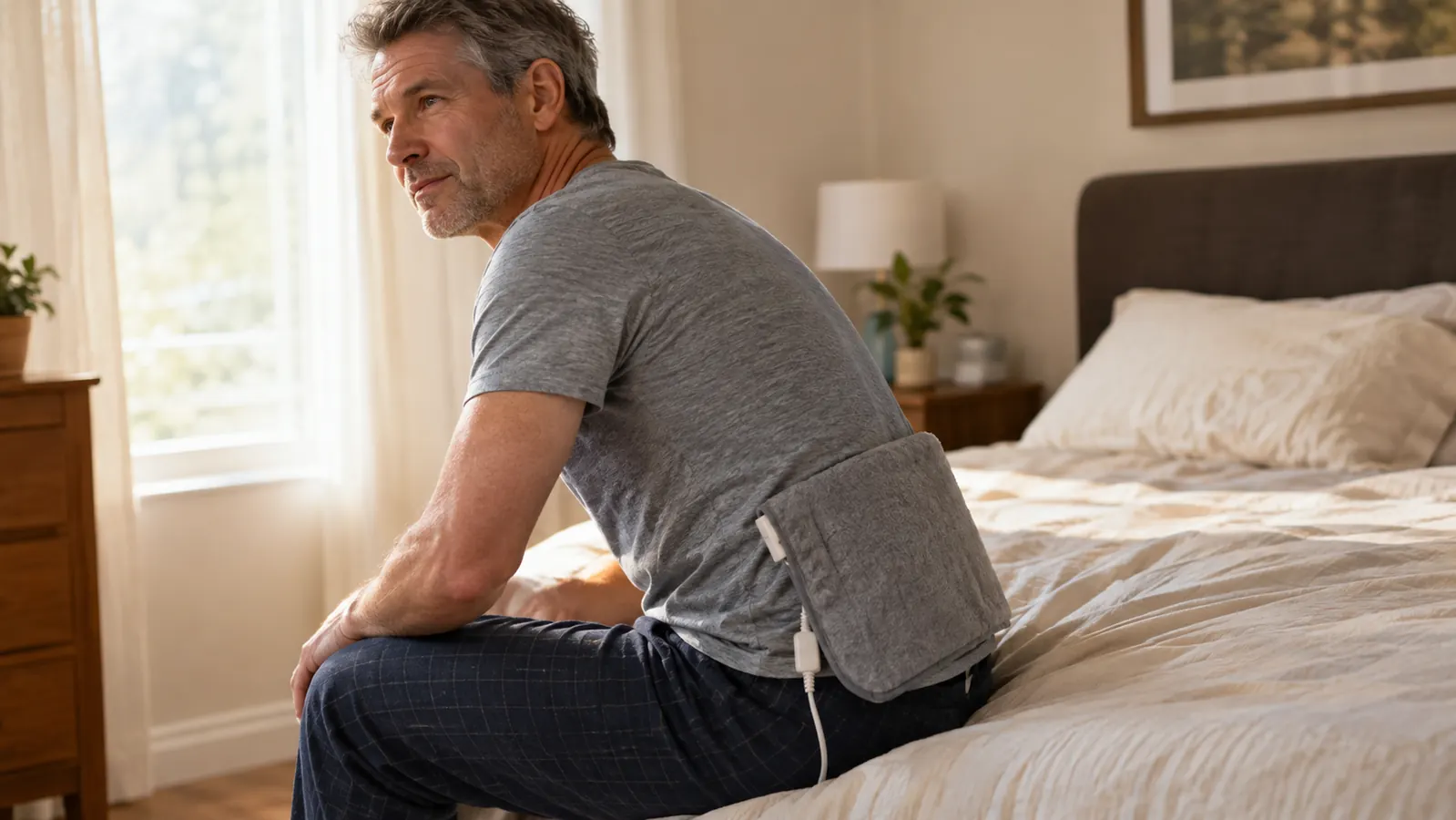
I have a confession to make. For years, I treated my morning back stiffness like a test of character. I would wake up, feel that familiar tightness across my lower back, and just push through it. I would swing my legs out of bed, shuffle to the kitchen, and stand at the counter waiting for the coffee to brew, hoping the stiffness would burn off on its own. Sometimes it did. More often, it hung around for the first hour of the day and made everything feel harder than it needed to be.
What finally changed things was not some complicated routine. It was a simple one: twenty minutes of heat before I asked my back to do anything demanding. The VIBOOS Heating Pad is the tool I have settled on for that morning ritual, and this guide walks through the exact routine I use, step by step, so you can try it without overthinking it.
Start your morning with twenty minutes of steady heat
The VIBOOS Heating Pad has six heat settings and an auto shut-off, so you can set it and forget it while you ease into the day. It is the pad I reach for most mornings.
Amazon Check Today's Price on Amazon →Step 1: Set the pad up the night before
The single biggest mistake I made with heating pads was waiting until I was already stiff to dig one out of a closet. By the time I found it, untangled the cord, and figured out where the outlet was, I had already spent ten minutes standing in a way that made my back angrier. Now I keep the VIBOOS pad in a drawer next to my side of the bed, with the cord loosely wrapped so it does not tangle.
I also make sure the pad is within reach of the outlet I use every morning. That sounds like a small thing, but it removes the friction that makes you skip the routine on days when you are tired. If you have a partner, tell them what you are doing so they do not move the pad to a different room. My wife Diane knows exactly where it lives now, and that saves us both a conversation at 6:30 in the morning.
One more tip: give the pad a quick once-over the night before. Check that the cord is not frayed and that the controller responds when you press a button. It takes ten seconds and it means you will not discover a problem at the worst possible moment. I do this check on Sunday nights before the work week starts, because that is when I am most likely to be rushing and least likely to notice a loose connection.
Step 2: Start on the lowest setting that feels warm
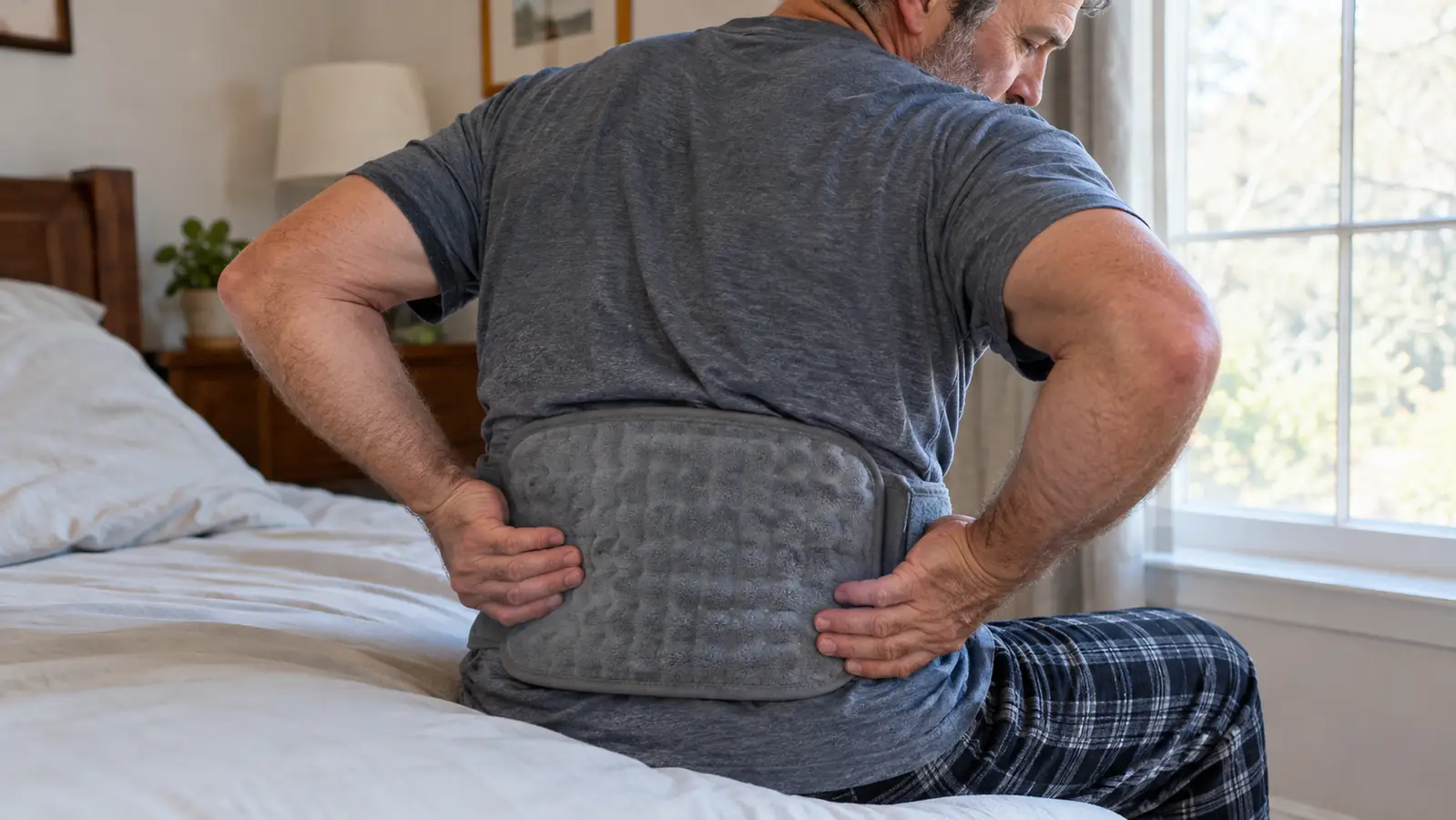
When I first started using the VIBOOS pad, I made the mistake of cranking it to the highest setting right away. I figured more heat meant faster relief. What I actually got was a back that felt overheated and a pad that I wanted to rip off after five minutes. The pad has six heat settings, and I have learned that the right one for a morning session is usually the second or third setting. It should feel warm, not hot. If you are uncomfortable, it is too high.
The reason I start low is simple. Morning stiffness is not the same as a fresh injury. It is usually the result of a night of sleeping in one position, and the muscles need gentle encouragement to loosen up, not a blast of heat. Starting low also means I can leave the pad on for the full twenty minutes without needing to fiddle with the controller. On a bad morning, after a long drive to Ohio in my CR-V or a day of raking leaves, I might move up to the fourth setting, but I always start low and give it a few minutes before I change anything.
If you are new to heat therapy, this is the step to get right. Give your body a minute to adjust to the warmth before you decide it is not working. The pad heats up quickly, but your back needs a few minutes to respond. I remember the first time I used it, I almost gave up after three minutes because I could not feel much. By the ten minute mark, the difference was obvious.
Step 3: Position the pad over the stiff area, not the whole back
Here is where I see people make the biggest mistake. They drape a heating pad over their entire lower back and hope for the best. The VIBOOS pad is large enough to cover a good portion of the lower back, but I get better results when I position it directly over the spot that feels stiffest. For me, that is the area just above my belt line on the left side. For you, it might be the center of your lower back or higher up near your shoulder blades.
The pad has a flexible design that lets it contour to your body, which helps it stay in place while you sit or lie down. I usually lie on my back with the pad positioned under me, or I sit in my recliner with the pad draped over the back of the chair. Both work. The key is to make sure the pad is flat against your skin or a thin layer of clothing, not bunched up in a way that leaves cold spots. I learned that lesson one January morning when I tried to read a book while the pad sat crooked against my side. I spent twenty minutes with one warm spot and one cold spot, and my back felt no better when I stood up.
A thin t-shirt is fine. A thick sweatshirt will block a lot of the heat. I have also learned that the pad works better when I am relaxed, not when I am trying to read or scroll through my phone. If I am distracted, I tend to shift around and the pad moves. Twenty minutes of sitting still is the goal. If I want to use the time, I listen to the news on the radio instead of doing anything that makes me fidget.
Step 4: Use the auto shut-off so you do not have to watch the clock
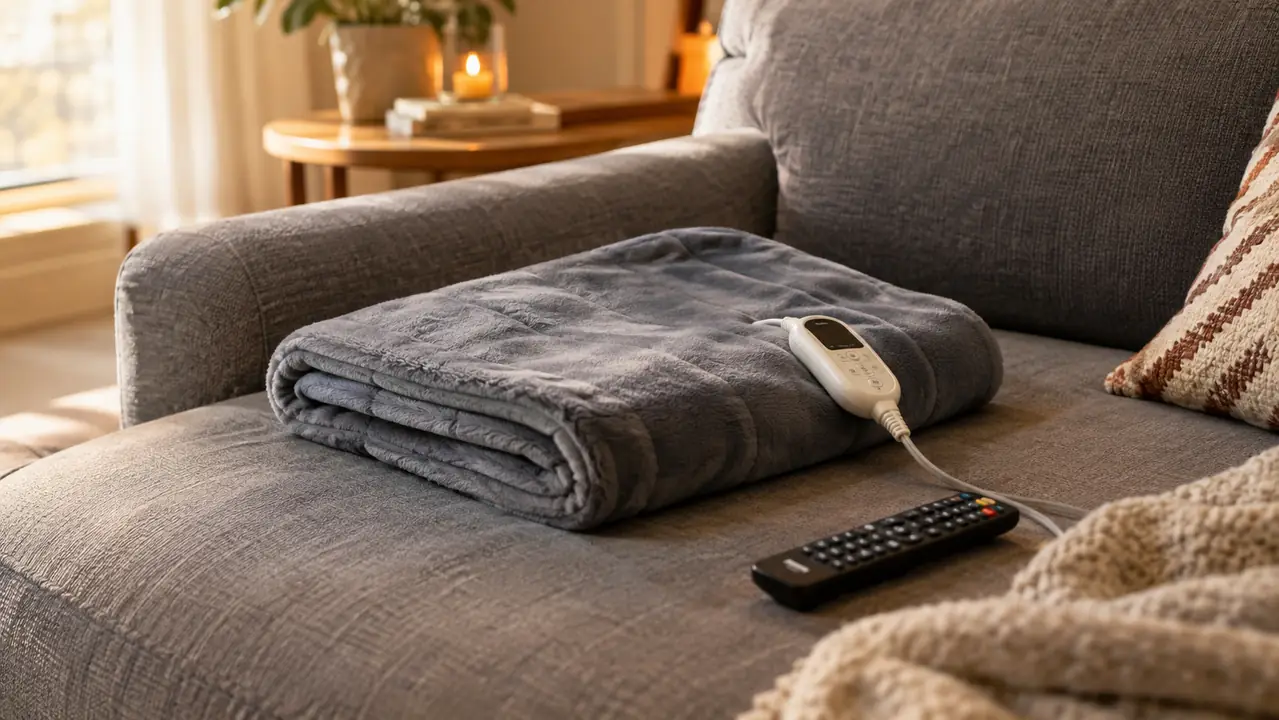
The VIBOOS pad has an auto shut-off feature, and I use it every single morning. I set the timer, lie down, and let the pad do its job. I do not have to worry about falling back asleep and leaving the pad on for an hour. The shut-off is a safety feature, but it is also a convenience. It means I can close my eyes for twenty minutes without any mental math about when to get up.
I have fallen asleep with the pad on more times than I care to admit. The auto shut-off has never failed me. It clicks off, the pad cools down, and I wake up when my alarm goes off. That peace of mind is worth a lot when you are half asleep at 6:00 in the morning. One morning last fall, I woke up at 5:45, put the pad on, and drifted off again. The pad shut itself off at the twenty minute mark, and I woke up at my normal time feeling looser than I had in weeks.
If you are someone who likes to use a heating pad while reading or watching the news, the auto shut-off is still useful. It gives you a natural stopping point. When the pad turns off, that is your cue to get up and start your day. I have tried using the pad without the timer, and I always end up leaving it on too long and getting too warm. The timer keeps the session honest.
Step 5: Move gently for a few minutes after the heat
Heat alone is not the whole answer. The twenty minutes of warmth loosens things up, but the real magic happens when you follow it with a little movement. I do not mean a workout. I mean a few minutes of gentle walking around the bedroom, some slow knee-to-chest stretches, or just standing up straight and rolling my shoulders. The heat makes that movement easier, and the movement reinforces what the heat started.
My physical therapist taught me this years ago. Heat prepares the tissue, but movement tells the body it is safe to move. If I skip the movement and go straight to sitting at the kitchen table, the stiffness tends to come back within the hour. If I take five minutes to walk around and stretch, the relief lasts much longer. I tested this on a Tuesday in March: I did the full twenty minutes of heat, skipped the movement, and by the time I finished my coffee the tightness was back. The next morning, I did the same heat session and then walked a slow lap around the upstairs hallway before heading down. The difference was night and day.
This is also the step where I remind myself not to overdo it. The goal is to ease into the day, not to prove anything. If the stiffness is worse than usual, I keep the movement gentle and I do not push through sharp pain. That is a sign to check in with a doctor or physical therapist, not a sign to add more heat. I have had mornings where my back felt like a board, and the right answer was a shorter walk and a longer stretch, not a heroic effort.
What Else Helps
The VIBOOS pad is the centerpiece of my morning routine, but it is not the only thing I do. I sleep with a pillow between my knees to keep my hips aligned. I try to get up and move every hour during the day instead of sitting for long stretches. And I do a short set of exercises from my physical therapist a few times a week. The pad makes those other habits easier to stick with, because it takes the edge off the stiffness that used to make me want to stay in bed.
I also use the pad in the evening sometimes, after a long drive or a day of yard work. The same routine that works in the morning works at night, and the auto shut-off means I can use it while I read without worrying about it. If you are dealing with stiffness that does not improve with heat, or if the pain is sharp or radiating down your leg, that is worth a conversation with a professional. Heat is a comfort tool, not a cure.
The twenty minutes of heat does not fix my back. It makes the rest of my morning routine possible, and that is the part that actually matters.
Give your back a gentler start tomorrow
The VIBOOS Heating Pad is the tool I reach for every morning. Six heat settings, auto shut-off, and a design that stays put while you relax into the day.
Amazon Check Today's Price on Amazon →