
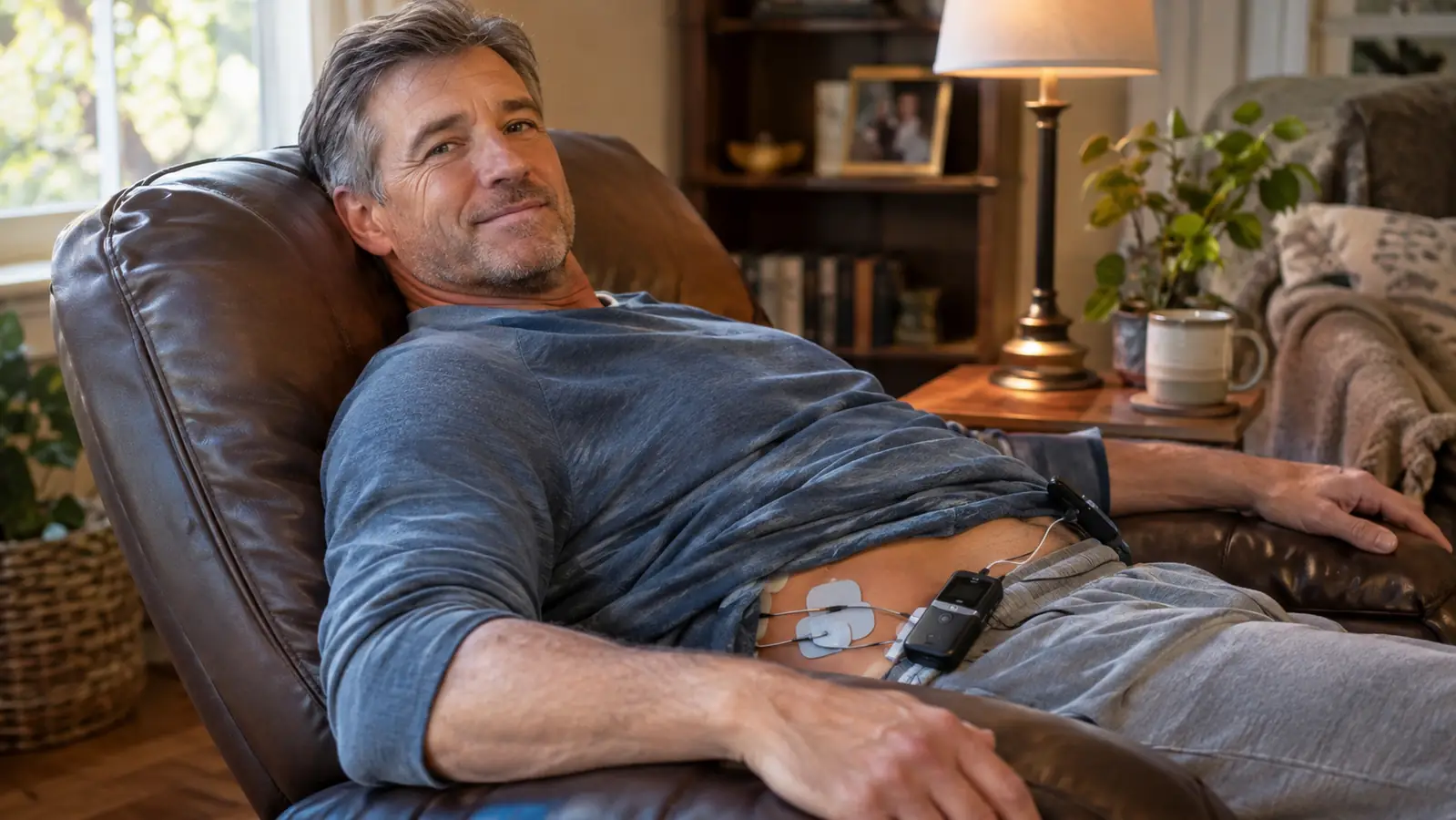
My lower back has been cranky for about a decade now. Twenty-seven years on a walking mail route will do that, and by the time I retired, I had a whole shelf of things I had tried: heat pads, ice packs, a massage gun, a foam roller, a lumbar support for the car, even a posture brace I wore exactly twice. Some of it helped a little. Most of it ended up in a closet. So when I finally got a TENS 7000, I did not expect much. I figured it would be another gadget I used for a week and then forgot about. That was months ago, and I still reach for it several times a week.
This is not a cure. Nothing I have found is a cure. But for the kind of everyday stiffness that shows up after yard work, a long drive, or a bad night's sleep, the TENS 7000 has become the first thing I grab. It is not fancy, it is not wireless, and it does not connect to an app. It just does one thing well, and it has done it consistently for me.
The Quick Verdict
The TENS 7000 is a straightforward, reliable unit that does exactly what a TENS unit should do. It is not sleek and it takes a minute to learn, but it has held up through months of regular use and it is easy to recommend to anyone who wants a no-nonsense option.
Amazon Check Today's Price →A Simple Unit That Still Gets Used Months Later
If you want a dependable TENS unit without the app and the subscription, the TENS 7000 is worth a look. It has over 112,000 ratings on Amazon and it has earned its place in my living room.
Amazon Check Today's Price on Amazon →How I've Used It
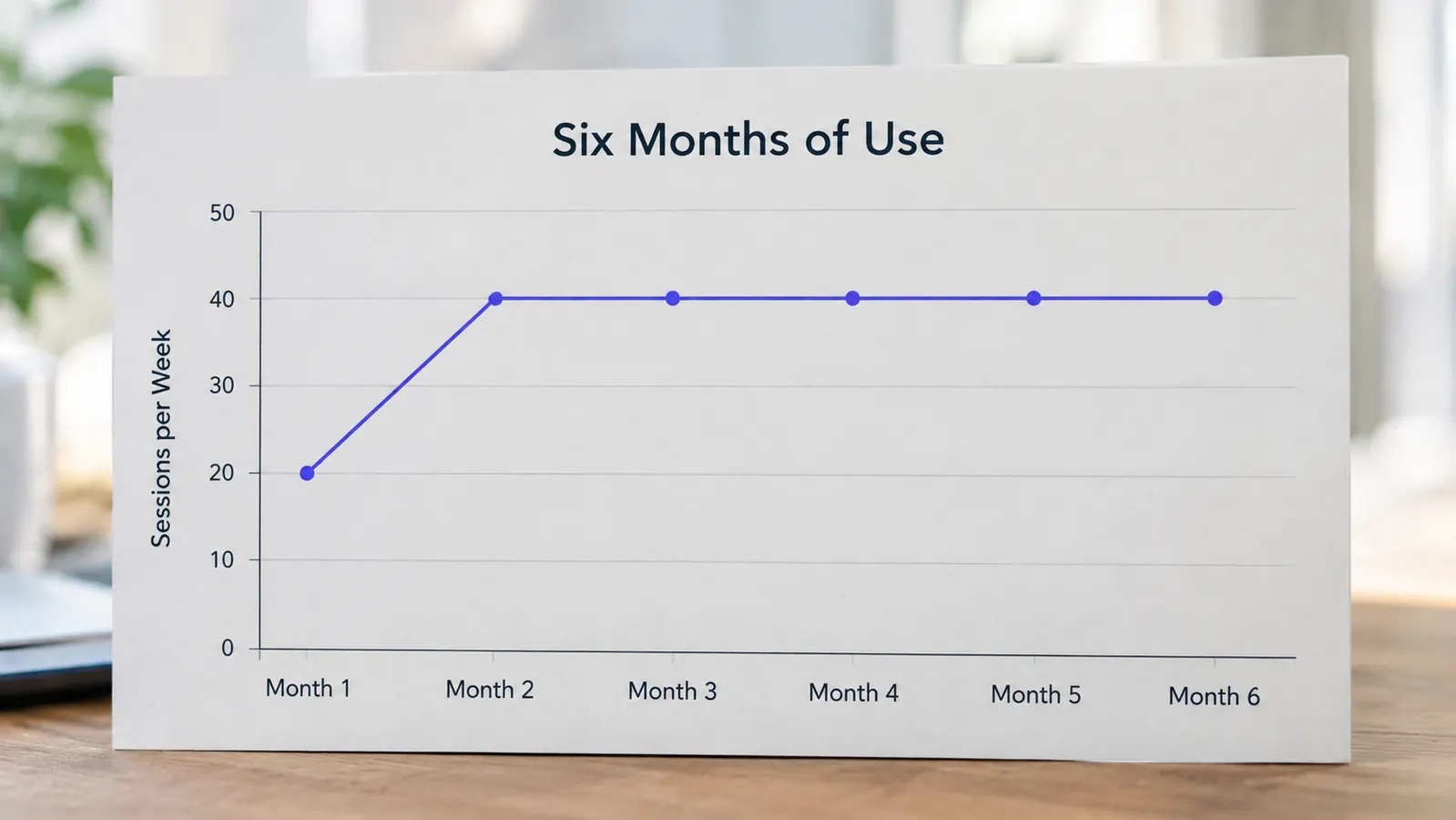
I have had the TENS 7000 for about six months. Most weeks I use it three or four times, usually in the evening when I am sitting in my recliner watching something with Diane. I put two pads on my lower back, set the mode and the intensity, and let it run for twenty minutes. On bad days, the ones where I wake up stiff or I have spent the afternoon on my knees in the garden, I will use it twice.
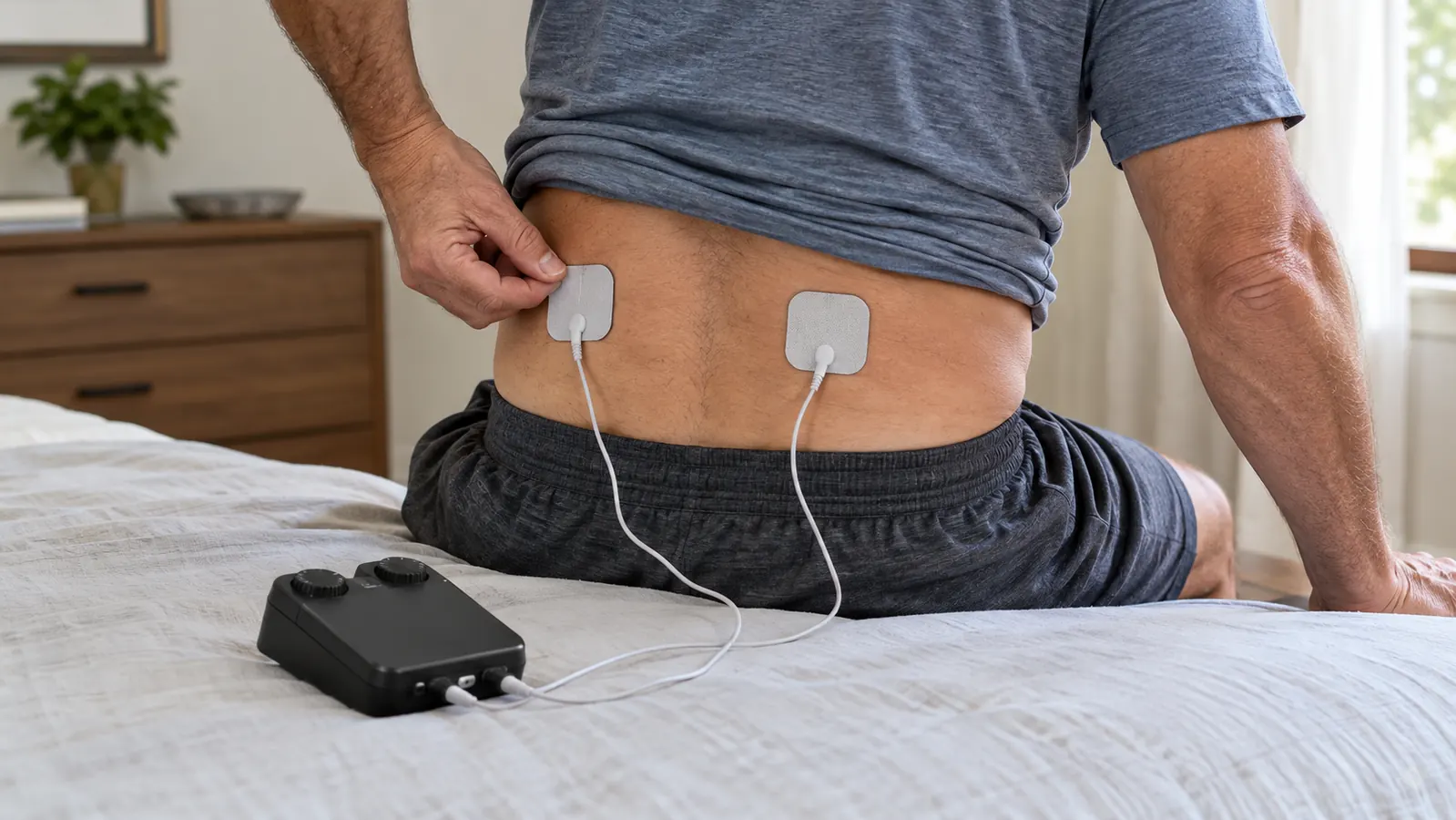
The unit runs on a 9-volt battery, which surprised me at first. I expected something rechargeable. But that has actually been fine. One battery has lasted me well over a month, and I keep a spare in the drawer so I am never stuck. The wires clip in at the top, the pads stick on with gel, and the whole thing fits in the palm of my hand. I clip it to my waistband and go about my evening.
I have also used it on my neck a handful of times, when the tightness from reading in bed gets the better of me. I keep the intensity lower up there. My physical therapist gave me a quick rundown on pad placement when I first mentioned it, and I have stuck to what she showed me. If you are new to TENS, that is the advice I would give too: have someone who knows what they are doing show you where to put the pads before you experiment on your own.
My usual setup is in the recliner in the evening. I put the pads on either side of my lower back, on the muscles and not on the spine itself, following the placement guide that came with the TENS 7000. I start at the lowest intensity, turn it up slowly until I feel a steady tingle that is clearly there but not uncomfortable, and leave it for about twenty to thirty minutes while I watch the news. Diane knows not to hand me anything heavy while I am wired up. I never use it while driving or in bed.
The first time I used it I turned it up too fast, and the tingle went from pleasant to a sharp twitch in a couple of seconds. That was a good lesson. The dials are sensitive near the top, so now I turn them up a little at a time, wait a few seconds, and only go further if it still feels comfortable. If you take one thing from this review, take that: go slow on the dials, especially at first.
What the TENS 7000 Actually Does
A TENS unit works by sending small electrical pulses through pads on your skin. The idea is that those pulses can help ease pain signals and give you a break from the ache. I am not a doctor and I am not going to pretend to be one. What I can tell you is what it feels like: a strong tingling, almost like the area has fallen asleep but in a good way, and while it is running, my back simply stops being the loudest thing in the room.
The TENS 7000 has five modes and a dial for intensity. The modes change the pattern of the pulses, from a steady hum to a rhythmic pulse to a few others I cannot describe any better than that. I mostly use the first mode. Diane tried it once on her shoulder and preferred a different one. It is nice to have the options, even if most people will settle on one and stay there.
The intensity dial goes from zero up to a number I have never needed to find. I usually run mine around a four or a five. The first time you use it, start low and work your way up. There is no prize for turning it all the way up, and it should never hurt. If it hurts, it is too high.
What it actually does, for me, is give my lower back something else to pay attention to. The tingle seems to take the edge off the dull, achy stiffness I get after a long day of yard work or a long drive. It does not make anything go away for good, and when I take the pads off, the stiffness tends to drift back over the next hour or two. But that hour or two of relief in the evening is often enough to let me relax, read, and get to bed without that nagging ache. That is a modest result, and I think a modest result is the honest one.
How It Has Held Up Over Time
The TENS 7000 is not a pretty piece of equipment. It is a plain black box with a clip, a dial, and a few buttons. But it is built like the kind of tool that is meant to be used, not admired. I have dropped it on the floor twice, once onto the hardwood in the living room. It barely has a scratch. The buttons still click the way they did on day one, and the clip has not gotten loose.
The pads are a different story. They wear out. The gel loses its stick after a couple of weeks of regular use, and when that happens, the pads do not make good contact and the unit does not feel as strong. That is not a flaw in the TENS 7000. It is just how electrode pads work, and it is true of every unit I have looked at. I buy a fresh pack when I notice the old ones slipping, and I am back in business.
The wires have held up fine. I was worried they would be the weak point, since they are thin and I am not gentle with my gear. So far, no problems. I coil them loosely when I put the unit away, and I have not had a single issue with a loose connection.
The pads are the part that wears out. A set lasts me a few weeks of regular use before the gel stops sticking well, and then they start lifting at the edges, which makes the tingle uneven and less comfortable. I keep them on the plastic sheet they came on, in the bag, between uses, and I make sure my skin is clean and dry before I put them on. That stretches their life a lot. Replacement pads are inexpensive and easy to find, so I just keep a spare pack in the drawer. The unit itself and the lead wires have held up fine.
I also had to replace the battery a few times, which is easy, but worth knowing about because the unit gets weaker as the battery runs down, and at first I thought the device itself was getting worse. A fresh battery fixed it right away. Now I keep a spare next to the replacement pads so I am never stuck halfway through a bad back evening.
Six months in, the TENS 7000 is still the first thing I grab on a bad back day. That is more than I can say for most of the stuff on my shelf.
What I Like and What I Don't
What I Liked
- Simple to use once you learn the two or three buttons that matter
- Runs on a standard 9-volt battery, so there is no charging cable to lose
- Small and light enough to clip on a waistband and move around
- Five modes and a wide intensity range give you room to find what works
- Built like a workhorse; mine has survived a couple of drops
- Over 112,000 ratings on Amazon and a reputation that goes back years
Where It Falls Short
- The buttons and modes take a little getting used to at first
- The included pads wear out and you will need to buy replacements
- No wireless pads and no app, which matters if you want a modern unit
- The 9-volt battery is a small hassle compared to a rechargeable unit
Who This Is For
The TENS 7000 is for someone who wants a tool that works and does not care about bells and whistles. It is for the person who has tried the massage gun and the foam roller and still wants something else in the rotation. It is for the person who would rather replace a 9-volt battery than remember to charge another device. And it is for the person who wants to spend a reasonable amount of money on something that has been around long enough to have a real track record.
If you are the kind of person who likes to read the manual and set things up exactly right, you will get along with the TENS 7000. If you are the kind of person who wants to open the box and have it work with no fuss, it will still work for you, but you will need to spend ten minutes with the instructions first. That ten minutes is worth it.
It is also a good fit for someone who has talked to a doctor or physical therapist about TENS and been told it is fine to try at home. Many physical therapy offices use these units in the clinic, and if you have had one there and liked it, a home unit lets you do the same thing in your own chair. Ask your clinician where to put the pads for your particular back, because the right spot is not the same for everyone, and a few minutes of their advice will save you a lot of trial and error.
Who Should Skip It
If you want a TENS unit you can wear under your shirt at work without anyone noticing, this is not it. The TENS 7000 has wires, and the unit itself is a small box you have to clip somewhere. It is not discreet. If you want an app that tracks your sessions and adjusts the intensity for you, this is not it either. There is no app, no Bluetooth, no wireless charging. It is a plain, wired unit, and that is the whole point.
And if your pain is not the everyday kind, if it is sharp, or it came on suddenly, or it is getting worse, do not buy anything yet. Go see a doctor or a physical therapist first. I say that because I mean it. A TENS unit is a tool for easing everyday discomfort, not a substitute for medical care. I have had a lot of conversations with my physical therapist over the years, and the TENS 7000 is part of my home program, not the whole program.
Skip it, and do not argue with this one, if you have a pacemaker, an implanted defibrillator or any other implanted electronic device, a heart condition, epilepsy, or are pregnant, unless your own doctor clears it. Never put the pads on the front or sides of your neck, across your chest, on your head, or on broken or irritated skin. And if your back pain is new, sharp, or comes with numbness, weakness, or problems with your bladder or bowels, do not reach for a TENS unit. Get checked out first.
Still Worth It After Six Months
The TENS 7000 has earned a permanent spot in my living room. If you are looking for a dependable, no-nonsense unit for everyday back pain, check the current price on Amazon and see if it fits your routine.
Amazon Check Today's Price on Amazon →