
I have had a cranky lower back for about ten years now. Twenty-seven years of walking a mail route in Rochester, New York, will do that to you, and by the time I retired, my back had its own opinions about yard work, long drives, and any night I slept badly. I have tried heat, ice, a massage gun, a foam roller, a lumbar support, a posture brace, and more stretching than I ever wanted to learn. Some of it helped a little. Most of it ended up in a closet. So when I started hearing people talk about the TENS 7000, I was interested but skeptical. I have been burned by enough gadgets to know that a device can have a thousand five-star reviews and still not do anything for you personally.
This is not a review from a lab. I am not a doctor, I am not a physical therapist, and I am not going to tell you that this machine fixed my back, because it did not. What I can tell you is what happened over six weeks of using the TENS 7000 almost every day, what it did for my pain, what it did not do, and the things I wish somebody had told me before I bought it. If you are dealing with everyday back stiffness and you are wondering whether a TENS unit is worth the money, this is the review I was looking for when I was trying to decide.
The Quick Verdict
The TENS 7000 is the most straightforward, dependable TENS unit I have used, and it genuinely takes the edge off my lower back stiffness. It is not a cure, the wires take some getting used to, and the instructions are written by someone who has clearly never met a human being. But for the price, it is hard to beat.
Amazon Check Today's Price →The TENS 7000 took my daily back stiffness from a 7 to a 4 in about twenty minutes
That is not a cure and I am not promising it will do the same for you. But after six weeks of daily use, it is the first device I have actually kept using past week two. Check today's price on Amazon and see if it is worth trying for your own back.
Amazon Check Today's Price on Amazon →How I've Used It
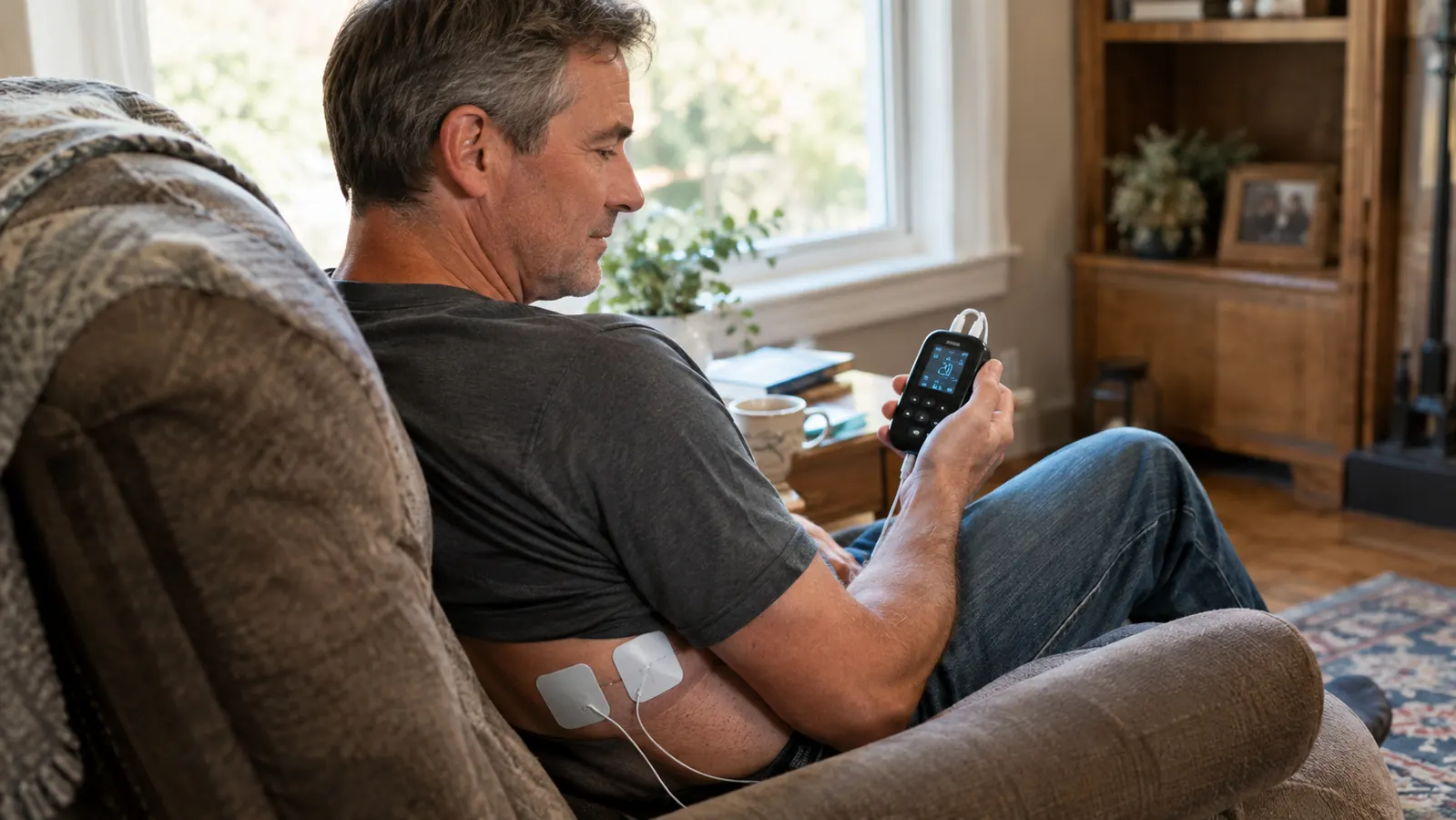
The TENS 7000 is a small, boxy device with a digital screen, two dials, and four buttons. It comes with two channels, which means you can run two sets of electrode pads at once, and the kit includes nine pads, the wires, a belt clip, a pouch, and a 9-volt battery. I used it on my lower back most days, and on my neck a few times when it got tight from reading. My routine was simple: I would sit in my recliner after dinner, stick two pads on either side of my lower spine, and run it for about twenty minutes while I watched television.
The first thing you notice is that the TENS 7000 does not feel like a massage. It feels like a strong, rapid tapping, almost like someone flicking you with a finger very fast. You can adjust the intensity with the dials, and you can adjust the pulse rate and width with the buttons. I started low and worked my way up until it was strong but not uncomfortable. The first time I used it, I was surprised at how quickly the sensation faded into the background. By the end of the first week, I was reaching for it automatically after a long day.
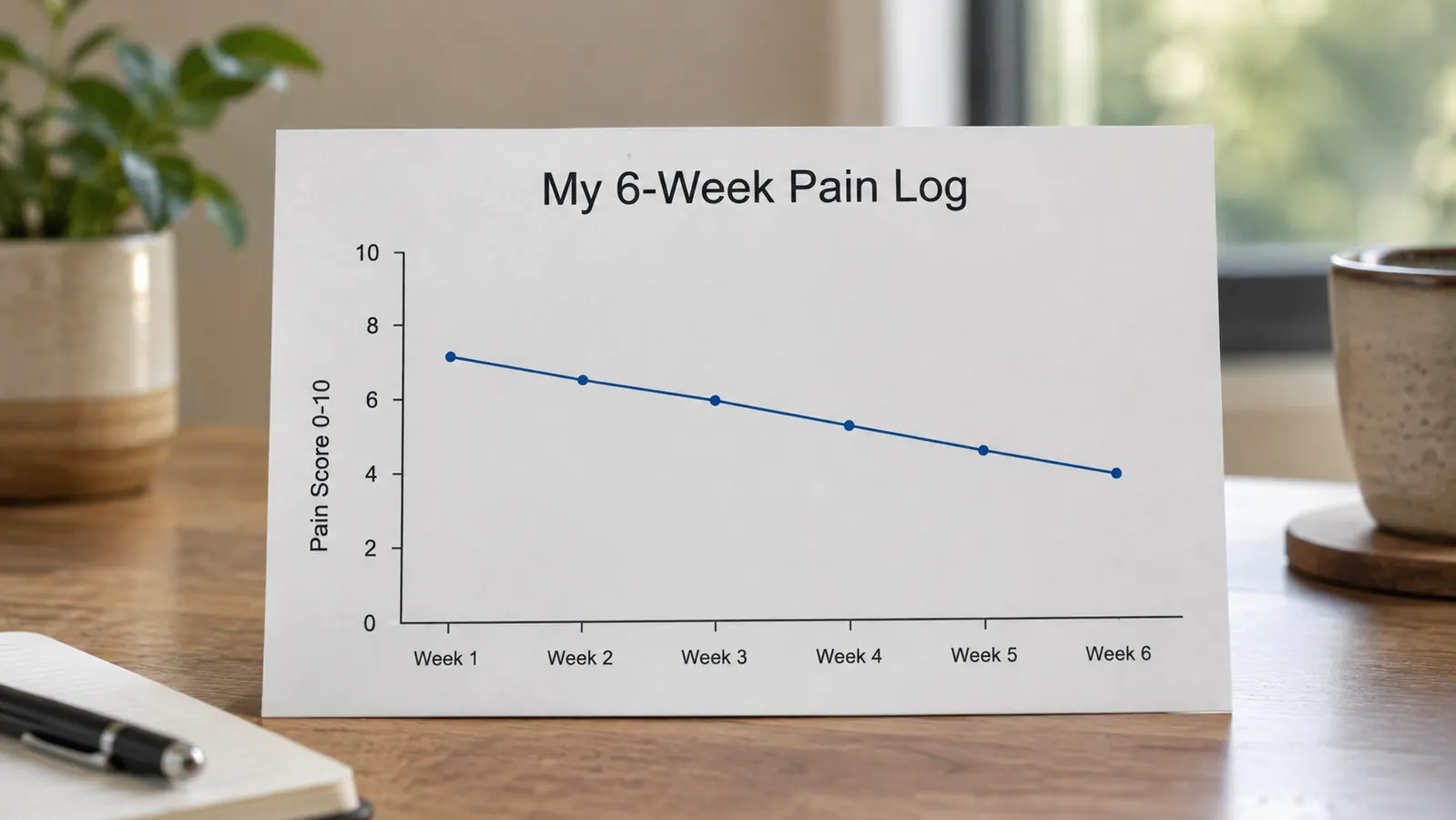
I kept a simple log, because I wanted to know if I was fooling myself. Every evening I wrote down a pain score from zero to ten before I used the unit, and then again about an hour after. My before scores hovered between a 5 and a 7 depending on the day. My after scores were almost always a 3 or a 4. The relief usually lasted a few hours, sometimes into the next morning. It did not make the pain go away. It made the pain quieter, and for me, that was worth a lot.
Most evenings it goes on in the recliner after dinner. I clean and dry the skin on my lower back, put the pads on the muscles on either side of the spine, set the timer, and bring the intensity up slowly until I feel a strong, comfortable tingle. Twenty to thirty minutes is my usual session. I do not use it every day, only on the days when yard work, a long drive, or a bad night's sleep has left my back grumbling. I never use it in the car or in bed, and I never fall asleep with it on.
What Nobody Tells You Before You Buy
Here is the part I wish someone had explained to me. A TENS unit does not treat the cause of your back pain. It does not strengthen anything, it does not fix a disc, and it does not undo the damage from twenty-seven years of carrying mail. What it does is interrupt the pain signal going to your brain, and that can give you a window where you feel good enough to do the things that actually help, like walking, stretching, and doing your physical therapy exercises. My physical therapist put it this way: think of it as a tool that helps you do the other work, not a replacement for the other work.
The second thing nobody tells you is that the TENS 7000 is not a set-it-and-forget-it device. It has a learning curve. The instructions that come in the box are genuinely bad. They read like they were translated by a machine, and the diagrams are small and confusing. I have a friend who bought one and gave up after two days because she could not figure out how to change the intensity without accidentally turning it off. It is not that the device is complicated. It is that the manual does a terrible job of explaining it. If you are not patient with that kind of thing, you might want to watch a video before you buy.
The third thing is the wires. The TENS 7000 is not wireless. You have two wires running from the unit to the pads, and if you are using it while you move around, the wires will get in the way. I mostly used it sitting in my recliner, so it was not a problem for me. But if you are hoping to wear it while you do chores or walk the dog, you should know that the wires are the most annoying part of the whole experience. The belt clip helps, but it does not make the wires disappear.
Nobody tells you the pads matter as much as the unit. Fresh pads stick well and spread the tingle evenly. Tired pads lift at the edges, and the tingle gets patchy and prickly in one spot. The first time that happened I thought something was wrong with the TENS 7000. It was just the pads. Now I store them on their plastic sheet in the sealed bag, I keep a spare pack in the drawer, and I swap them as soon as they stop sticking well. The difference between good pads and worn ones is the difference between relaxing and fidgeting.
It did not make the pain go away. It made the pain quieter, and for me, that was worth a lot.
What It Actually Did for My Back Over Six Weeks
I want to be careful here, because it is easy to overstate what a TENS unit can do. The TENS 7000 did not cure my back. It did not make me pain-free. What it did was give me a reliable way to take the edge off on days when my back was stiff and sore. On a bad day, a 7 out of 10, twenty minutes with the TENS 7000 would bring me down to a 4. On a good day, it would take me from a 4 to a 2. The relief was not permanent, but it was consistent, and consistency is what I valued most.
The other thing it did was change my behavior. Because the TENS 7000 made my back feel better, I was more willing to do the things my physical therapist had been telling me for years. I walked more. I did my stretches more often. I even started using the foam roller again, which I had mostly abandoned. I do not think the TENS 7000 deserves all the credit for that. But I do think it deserves some. When you are in pain, you do not want to move. When the pain is quieter, you are more likely to do the work that keeps it quiet.
I also used it on my neck a handful of times. My neck tightness comes from reading, and the TENS 7000 helped there too, though not as dramatically as it helped my lower back. I found that I had to be more careful with pad placement on my neck, and I kept the intensity lower. I will say the same thing I say about everything: if you have pain in your neck or anywhere near your spine, talk to a doctor or physical therapist before you start sticking electrodes on yourself. I am not the person to give you medical advice.
What it did not do is change my back over the long run. When I take the pads off, the relief tends to fade over the next hour or two, and the next day my back is about where it would have been anyway. I still do my stretches, I still walk every morning, and I still use heat before I exercise. The TENS 7000 is the thing I reach for in the evening to make an achy night more comfortable. Seen that way, it has earned its spot next to the recliner. Seen as a fix, it would be a disappointment.
The Good, the Bad, and the Ugly
What I Liked
- Genuinely effective at taking the edge off everyday back stiffness, in my experience
- Two channels let you treat two areas at once, like lower back and neck
- Simple controls once you get past the manual
- Comes with nine pads, wires, a belt clip, a pouch, and a battery
- Pads are cheap to replace and easy to find
- Small enough to toss in a drawer or a travel bag
Where It Falls Short
- Wires are annoying if you want to move around while using it
- The instruction manual is genuinely bad
- Not wireless, which is a dealbreaker for some people
- Relief is temporary, not a fix for the underlying problem
- The 9-volt battery is a little old-fashioned; you will want a spare
Who This Is For
The TENS 7000 is for someone like me. Someone with everyday back stiffness who wants a drug-free way to take the edge off, and who is willing to sit still for twenty minutes while a machine taps their back. It is for people who understand that a TENS unit is a tool, not a cure, and who are already doing the other things that help, like walking, stretching, and seeing a physical therapist. It is for people who do not mind a few wires and who are patient enough to learn a slightly clunky interface.
It is also for people who want to try TENS therapy without spending a fortune. The TENS 7000 has been around for a long time, it has over a hundred thousand reviews, and it is one of the most popular TENS units on the market for a reason. It is not fancy. It is not wireless. It does not have a smartphone app. But it does the job, and it does it reliably. If you are new to TENS and you want to find out whether it works for you, this is a reasonable place to start.
It also suits anyone who likes simple, physical controls. There is no screen to learn, no app, and no account, just a couple of dials and a few buttons.
Who Should Skip It
If you are looking for a wireless TENS unit you can wear under your clothes while you go about your day, the TENS 7000 is not it. The wires will drive you crazy. If you want something with an app and fancy programs and Bluetooth, this is not it either. The TENS 7000 is a plain, no-nonsense device, and that is exactly what some people do not want.
And if you are hoping that a TENS unit will fix your back, please hear me on this: it will not. If you have real, persistent, or worsening pain, if you have numbness or weakness in your legs, or if you have any reason to think something is seriously wrong, do not buy a TENS unit instead of seeing a doctor. I am a retired letter carrier, not a physician. The TENS 7000 helped me manage my everyday stiffness, and I think it can help a lot of people manage theirs. But it is not a substitute for medical care, and anyone who tells you otherwise is selling you something.
You should also skip it if you know you will not follow the rules. A TENS unit asks a few simple things of you: keep the pads off the front and sides of the neck, off the chest and head, off broken skin, never use it while driving, bathing or sleeping, and start low every time. If that sounds like too much fuss, it is better not to buy one. And if you have a pacemaker or other implanted device, a heart condition, epilepsy, or are pregnant, do not use one unless your doctor specifically says it is safe for you.
If you want a plain, dependable TENS unit that actually gets used, the TENS 7000 is hard to beat
It is not wireless, it is not fancy, and the manual is terrible. But after six weeks of daily use, it is the device I reach for when my back flares up. Check today's price on Amazon and decide for yourself.
Amazon Check Today's Price on Amazon →